 Merken
 The first time I assembled a board entirely around red wine was on a rainy October evening when my partner brought home an unexpected bottle of Malbec. I'd been staring at my cheese drawer thinking about what to do with those wine-soaked cheeses I'd picked up at the market—Drunken Goat, that gorgeous ruby cheddar, the Merlot-infused BellaVitano. Something clicked. Why not build the entire experience around those wines and the colors they inspired? Within an hour, the board came together as a conversation piece, each element deepening the wine's character with every bite.
I still remember serving this to my friends Elena and Marco, both wine enthusiasts who'd become suspicious of my cooking experiments. When Elena took her first bite—pairing that wispy prosciutto with the Drunken Goat and a pomegranate seed—her eyes closed. "This is what I wanted at that restaurant in Florence," she said quietly. That moment made me realize a charcuterie board isn't just food; it's permission to slow down and taste things intentionally together.
Zutaten
- Prosciutto: The delicate sweetness here balances the heavier wines; buy it sliced fresh if possible, as pre-packaged loses its silky texture quickly.
- Bresaola: This air-dried beef brings an earthy complexity that makes the wine-soaked cheeses pop, but slice it thin or it becomes chewy.
- Würziger Chorizo: The paprika and garlic are essential anchors for bold red wines; don't skip this textural and flavor contrast.
- Geräucherter Rinderslami: This is your quiet backbone—smokiness threads through and connects all the wild flavors.
- Drunken Goat Käse: The wine-soaking transforms goat cheese's sharpness into something honeyed and mysterious; it's worth seeking out specifically.
- Red Wine Cheddar: Cube it rather than slice it so guests get concentrated flavor bursts; the wine notes deepen as the cheese warms.
- Merlot BellaVitano: This is showstopper cheese—nutty, slightly crystalline, and the wine infusion makes it unforgettable; don't hide it in the corner of your board.
- Rote Trauben: Their juicy sweetness cleanses the palate between salty meats and rich cheeses; wash them just before serving or they weep.
- Granatapfel: The seeds add jewel-like color and a sharp tartness that cuts through wine-soaked richness like nothing else can.
- Rote Zwiebel Marmelade: Spoon this sparingly over the softer cheeses; it brings umami depth that resonates with the wine.
- Roasted Red Peppers: They're sweet and silky against the harder salumi; if using jarred, drain them well or they'll weep onto your board.
- Getrocknete Preiselbeeren: These tiny bursts of tartness prevent the board from feeling too rich after a few bites.
- Baguette: Toast it lightly if you're making this more than 20 minutes ahead, or the moisture from the board will make it soggy.
- Red Beet Crackers: They're nutty, earthy, and look stunning; they also hold up better than regular crackers under the weight of toppings.
- Frischer Rosmarin: Brush the sprigs lightly with olive oil before placing them; it releases the scent and prevents browning.
Tired of Takeout? 🥡
Get 10 meals you can make faster than delivery arrives. Seriously.
One email. No spam. Unsubscribe anytime.
Anleitung
- Die Fleischsorten vorbereiten:
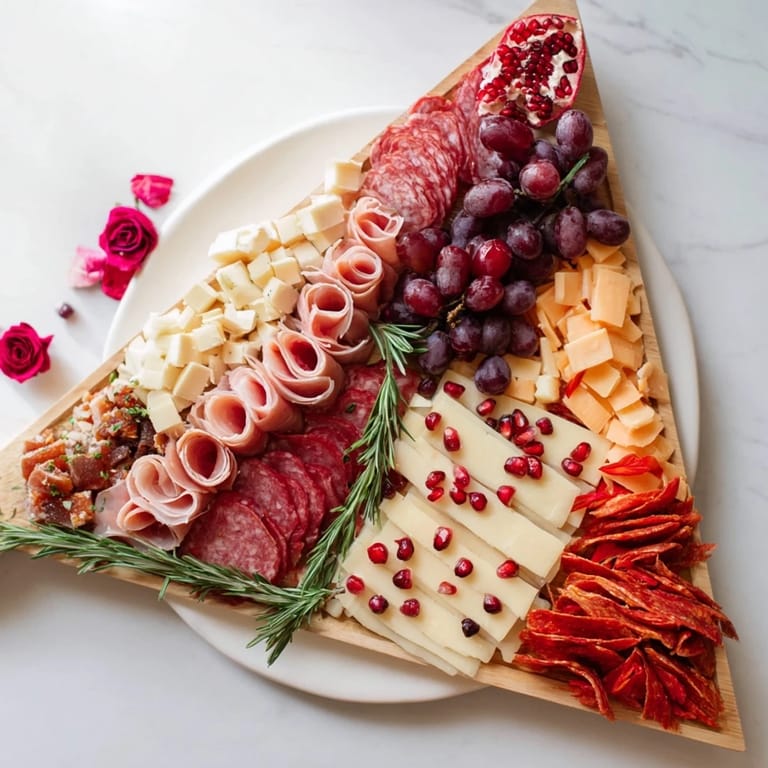
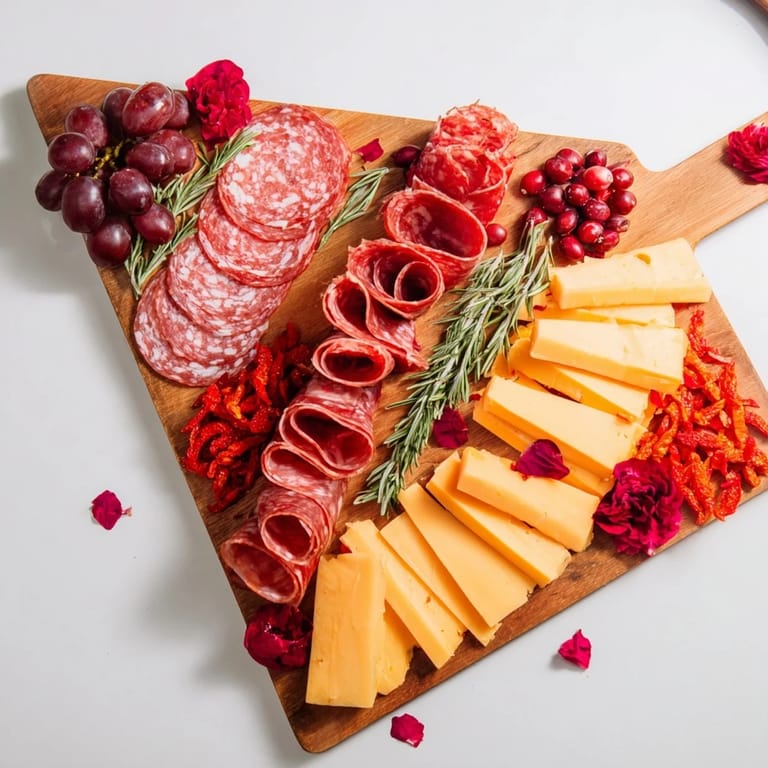
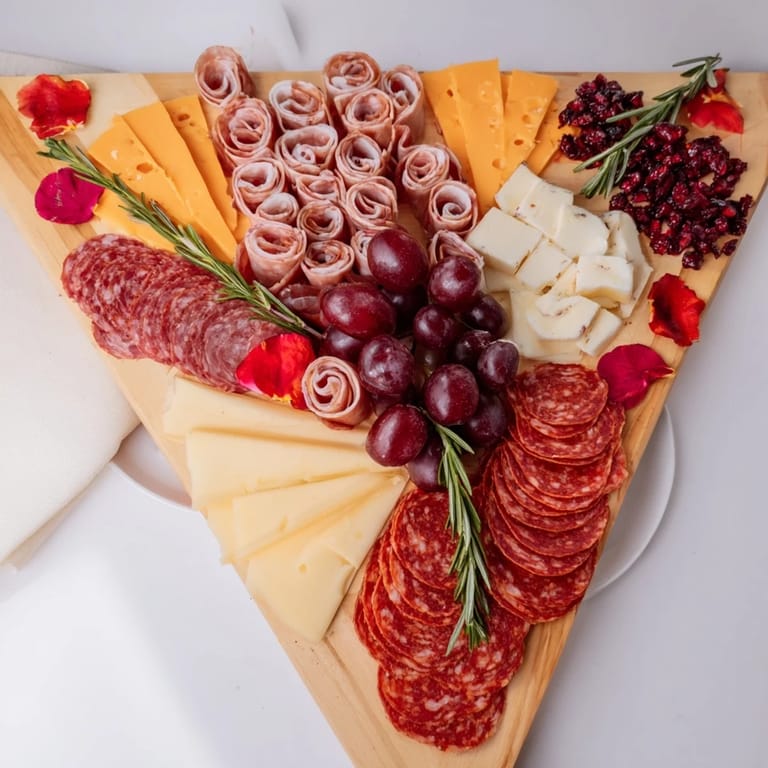
- Fold each meat gently into thirds or loose rolls—don't crush the delicate slices. Lay them out first in distinct zones on your board so you understand the geography before adding anything else; this moment of planning prevents the chaos of a too-crowded composition.
- Die Käsesorten anordnen:
- Let the Drunken Goat warm for five minutes on the counter before slicing; cold cheese from the fridge won't show its true color or texture. Cube the Red Wine Cheddar and fan the Merlot BellaVitano so each piece gets light, making the board feel generous and intentional.
- Begleitungen hinzufügen:
- Scatter the grapes and pomegranate seeds first—they anchor the composition with color. Then place the cranberries and peppers, leaving pockets of negative space so the board doesn't feel suffocating or overwhelming.
- Mit Brot und Crackern füllen:
- Arrange baguette and beet crackers in clean lines through the remaining gaps; this is where the board transforms from chaotic to composed. Stand a few crackers upright for height and visual interest.
- Garnieren und ruhen lassen:
- Tuck fresh rosemary sprigs between cheeses and meats, positioning them so they frame clusters rather than disappear. If using edible rose petals, add them last, just before guests arrive, so they stay vibrant and dimensional.
- Bei Raumtemperatur servieren:
- Let the board sit uncovered on your table for 10 minutes before guests dive in; cheeses taste fuller and flavors blend more gracefully when everything reaches that perfect cool-room-temperature equilibrium.
 Merken
 What I didn't expect was how this board would become a ritual. My brother now calls every October asking if I'm making "the wine board" because it signals something shifts in our gathering—we slow down, we talk more, we reach for conversation as much as we reach for another slice of bresaola.
Die Kunst der Balance
A board like this is a study in contrasts working in harmony. The salty, smoky meats demand the sweetness of grapes and cranberries. The rich, wine-drunk cheeses need the sharp pomegranate and the vinegary red onion jam to feel bright rather than heavy. Every texture and taste should make the next one taste better, not worse. I learned this by watching my guests, noticing which bites they came back for and which elements they passed by. The board that survives the evening is the one with intention in every cluster and consideration in every placement.
Wein-Paarungen und Gefährten
Don't think of wine as something that simply goes with this board—think of it as a character in the meal itself. Cabernet Sauvignon is the bold choice, structured and almost peppery enough to cut through the richness. Malbec is softer, more approachable, and its plum notes hug the dried cranberries in an almost uncanny way. If you pour Merlot, watch how it echoes the wine already soaked into the BellaVitano cheese; it's like the board is whispering back to your glass. I've also had stunning success with a dry red blend that plays quiet, letting the flavors on the board take center stage rather than fighting for attention.
Vergrößern und Personalisieren
This board is a framework, not a cage. The first time you make it, follow the structure so you understand how the elements speak to each other. The second time, swap the Merlot BellaVitano for an aged Manchego rubbed with smoked paprika if you want earthiness instead of fruit. Replace the baguette with sourdough if your guests lean that way. Add a sharp blue cheese soaked in red wine if you want to take the boldness further. The variables are infinite, but the principle remains the same: every flavor should have a reason for being there, and every reason should deepen the conversation around the table.
- If your pomegranate feels too tart, balance it with an extra spoonful of the red onion jam nearby.
- Toast your baguette slices lightly under the broiler for 90 seconds if you're assembling the board more than 30 minutes before serving.
- Keep a small damp cloth nearby while arranging—your hands will get sticky from the fruits, and you'll want to wipe between placements to keep the board pristine.
 Merken
 In the end, this board taught me that entertaining isn't about perfection—it's about intention. It's about saying to your guests, through every slice and seed and sprinkle of rosemary, that you thought about what they might love.
Fragen & Antworten zum Rezept
- → Welche Fleischsorten passen ideal zur Platte?
Empfohlen werden luftgetrocknete Sorten wie Prosciutto, Bresaola, würzige Chorizo und geräucherte Salami für eine vielfältige Textur und Geschmackstiefe.
- → Wie werden die Käse am besten vorbereitet?
Käse in mundgerechte Stücke schneiden und rotweinmariniert servieren, um deren Aromen zu verstärken und optisch ansprechend zu präsentieren.
- → Welche Beilagen ergänzen die Fleisch- und Käseauswahl?
Frische rote Trauben, Granatapfelkerne, rote Zwiebelmarmelade, geröstete Paprika und getrocknete Cranberries bieten süß-würzige Kontraste.
- → Welche Knabbereien harmonieren mit der Platte?
Baguettescheiben und rote Rote-Bete-Cracker sorgen für eine knusprige Textur und runden das Geschmackserlebnis ab.
- → Wie sollte die Platte serviert werden?
Bei Raumtemperatur anrichten, um das volle Aroma und die optimale Textur der Zutaten zu gewährleisten.
- → Gibt es Empfehlungen für Getränkebegleitung?
Ein kräftiger Rotwein wie Cabernet Sauvignon oder Malbec ergänzt die intensiven Aromen ideal.