 Merken
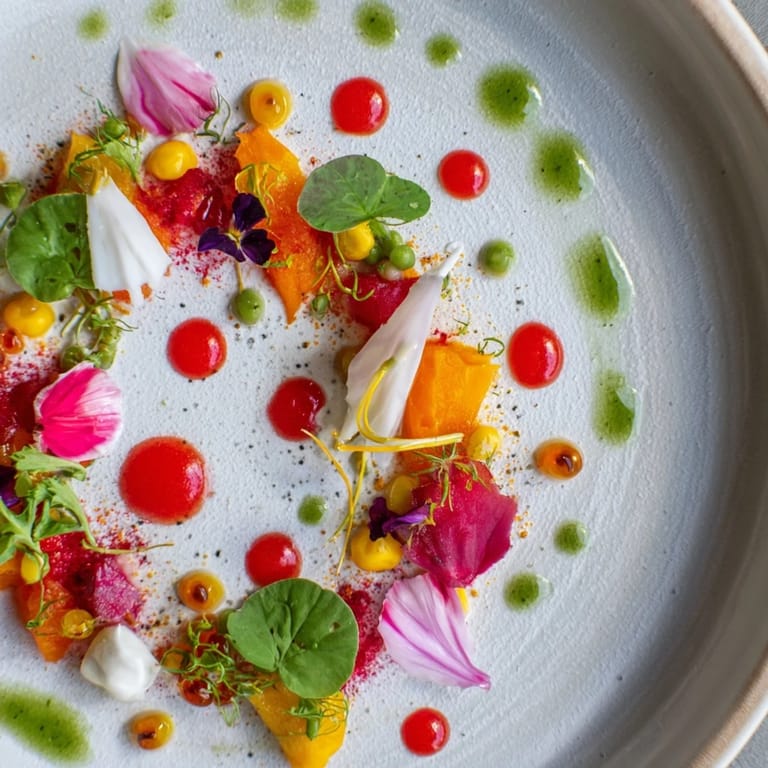
 The first time I truly understood that plating could be an art form was when I watched a chef arrange dots of color across a white plate like she was painting a canvas. I became obsessed with that idea—that food didn't have to sit in neat piles, but could be scattered, playful, intentional. This Pointillism Dot Matrix is my love letter to that discovery, a dish that asks you to slow down and appreciate each tiny burst of flavor separately before your fork decides to combine them all.
I made this for friends who'd been eating the same sad salads all winter, and watching their faces light up when they saw the plate was worth every minute of piping. One friend actually gasped and grabbed her phone before tasting anything, which made me laugh because that's exactly the point—beauty and flavor walking hand in hand.
Ingredients
- Beetroot Puree (80 g): Deep magenta and earthy, this is your anchor color that makes everything else pop; cook it beforehand so you're not staining your hands right before plating.
- Carrot Puree (80 g): Bright orange warmth that brings gentle sweetness without being cloying; roasting instead of boiling intensifies the flavor slightly.
- Green Pea Puree (80 g): The surprise verdant dot that tastes fresher than you'd expect; frozen peas work just as well as fresh and blend into an impossibly smooth cream.
- Yellow Bell Pepper Puree (80 g): Roasted until soft, this adds sunshine and a whisper of smokiness that grounds the whole composition.
- Greek Yogurt (60 g): Thick and tangy, use full-fat if you can because it pipes cleaner and tastes richer than the fat-free versions.
- Crème Fraîche (40 g): The sophisticated cousin of sour cream; it adds a subtle depth that yogurt alone can't quite capture.
- Basil Pesto (1 tbsp): Fresh or jarred both work, though fresh tastes alive in a way that reminds you spring exists.
- Red Pepper Coulis (1 tbsp): This is just roasted red peppers blended smooth, a silky bridge between the purees and the sauces.
- Balsamic Reduction (1 tbsp): The dark, glossy finale that adds complexity; simmer regular balsamic until it coats a spoon and turns syrupy.
- Pickled Red Onions (20 g): The acidic jolt that wakes up your palate between bites; pickle them yourself or buy them, but don't skip the vinegar punch they bring.
- Microgreens (20 g): Tiny and delicate, these add texture and a peppery note that echoes sophistication.
- Toasted Black Sesame Seeds (1 tbsp): Toast them yourself in a dry pan for two minutes—the aroma is intoxicating and the flavor impossibly nutty.
- Pomegranate Seeds (1 tbsp): Bursts of tart sweetness and jewel-like color that catch the light on your plate.
- Edible Flower Petals (optional): Choose something with flavor, like pansies or nasturtiums, not just decoration.
- Sea Salt Flakes & Black Pepper: Finish with these right before serving so they don't dissolve into the moisture on the plate.
Tired of Takeout? 🥡
Get 10 meals you can make faster than delivery arrives. Seriously.
One email. No spam. Unsubscribe anytime.
Instructions
- Blend Each Vegetable Until Silk:
- Cook your vegetables separately—boiling for the beets, peas, and peppers, roasting the peppers for added depth—then blend each one smooth with just a pinch of salt and a whisper of olive oil. The texture should be like velvet, thick enough to hold a shape but loose enough to pipe.
- Load Your Piping Arsenal:
- Fill one piping bag or squeeze bottle for each puree, plus separate containers for your yogurt, crème fraîche, and three liquid sauces. This setup looks chaotic on the counter but keeps you moving fluidly when you're actually plating, which matters because speed helps preserve the visual drama.
- Paint Your Plate Like an Artist:
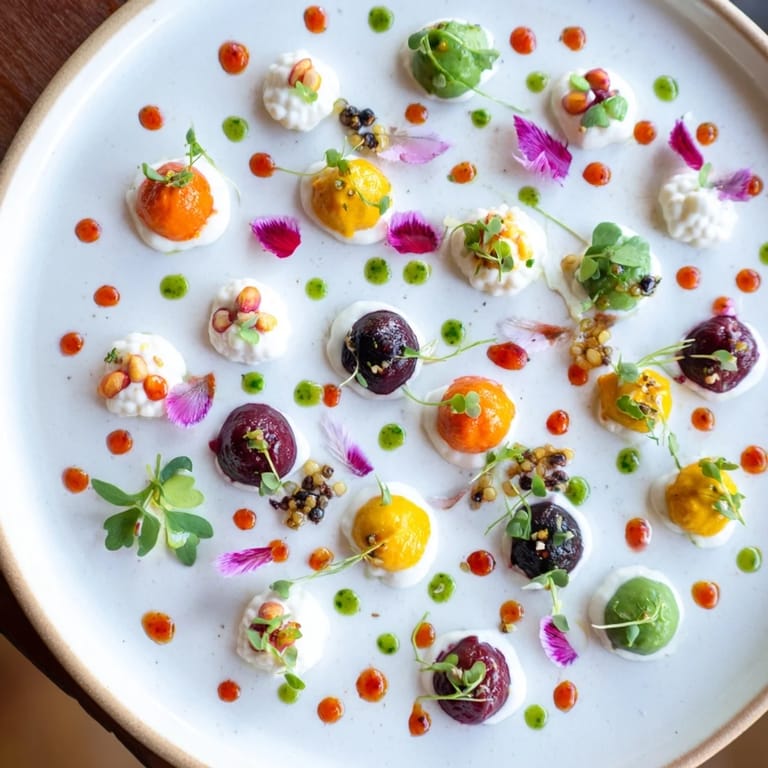
- Squeeze dots and mounds across each white plate in a scattered pattern, letting some dots touch and some stand alone, varying their sizes so nothing looks too symmetrical. Think pointillism, think intentional chaos, think like you're placing color blocks across a canvas—there's no formula, just your instinct about balance.
- Crown It With Accents:
- Sprinkle your pickled onions, microgreens, sesame seeds, pomegranate seeds, and edible flowers across the composition, tucking them into negative space and between dots to add dimension. Use chef's tweezers if you have them—your fingers are too clumsy for this precision.
- Season and Serve With Urgency:
- Grind black pepper and scatter sea salt flakes directly over the plated dish just before it leaves your hands, then carry it to the table with ceremony. This dish is about the visual moment, so photograph it, admire it, then eat it while everything is still at its best.
 Merken
 I learned that plating this dish is meditative in a way that regular cooking isn't—your hands move slowly, your eyes stay focused on balance and color, and for those few minutes on each plate, nothing else in the world matters. Food became art, and art became the whole point.
The Magic of Vegetable Purees
The beauty of this dish lives entirely in how you transform simple vegetables into silky purees that hold their color and honor their flavor. Each vegetable tastes like itself, but intensified, concentrated, elevated—the beetroot tastes more earthy, the carrot more golden, the pea more green. This happens because cooking and blending break down the vegetable fibers and release their natural sugars and flavors, which is why a rushed puree tastes flat and a patient one tastes alive. The salt matters too—just a pinch wakes up the vegetables in a way that makes you suddenly taste them properly for the first time.
Building Flavor Layers
The purees are your foundation, but the sauces and creams are where sophistication lives on this plate. The tangy yogurt and crème fraîche soften the earthiness of the beets, the pesto brings herbaceous brightness, the red pepper coulis adds sweetness and smokiness, and the balsamic reduction ties everything together with a dark, complex finish. When you eat this dish, you're not tasting each ingredient alone—you're discovering what happens when beetroot meets basil, or when carrot mingles with pomegranate, or when pea puree introduces itself to balsamic. This interplay is the whole conversation the dish wants to have.
Plating Like You Mean It
Here's the secret about plating this dish: there's no right way, only your way. Some dots can be large, some tiny, some can touch and some stand alone, some can overlap slightly if you're feeling dramatic. The pointillism technique is forgiving because the whole point is intentional variation—you're not aiming for perfection, you're aiming for intention. I've made this dish a hundred times and never twice the same way, which is exactly how it should be.
- White plates are non-negotiable because they make every color sing, but even a light grey or cream plate will work if that's what you have.
- Room temperature is your friend—don't chill the plate because cold mutes the flavors and hardens the purees into shapes you can't sculpt.
- Serve immediately because this dish is about the first moment when everything looks perfect and tastes bright, before the elements start to blend and lose their boundaries.
 Merken
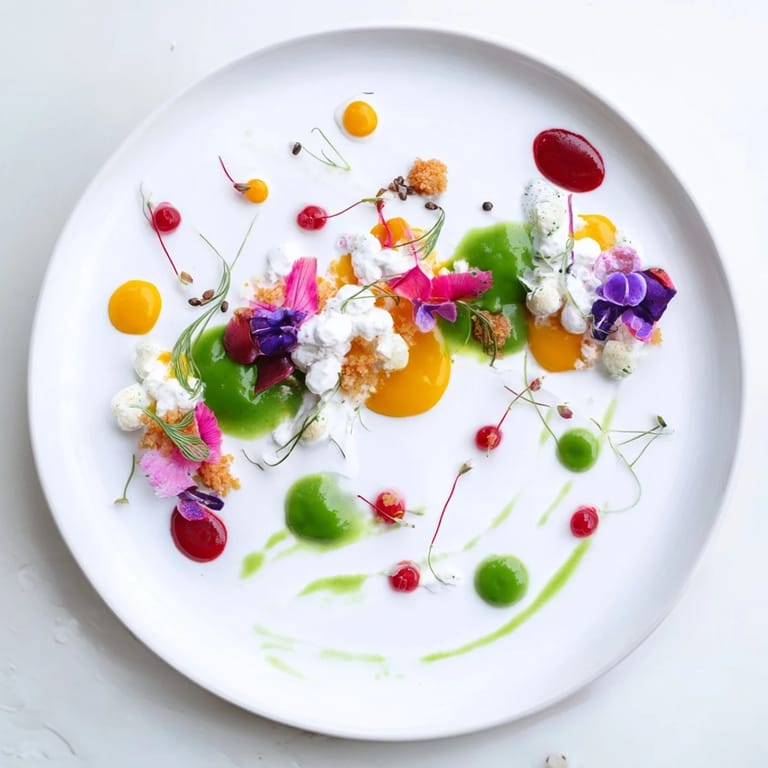
 This dish transformed how I think about eating—it taught me that food doesn't have to be fussy to be beautiful, and beauty on the plate makes everything taste better somehow. Make it for people you love and watch their faces change.
Fragen & Antworten zum Rezept
- → Wie erzielt man die farbigen Tupfen perfekt?
Nutze kleine Spritzbeutel oder Squeeze-Flaschen, um die Gemüsepürees und Saucen präzise in variierenden Größen aufzutragen und so den Pointillismus-Effekt zu erzielen.
- → Welche Gemüse eignen sich für die Pürees?
Rote Bete, Karotten, grüne Erbsen und gelbe Paprika werden empfohlen, da sie intensive Farben liefern und sich gut pürieren lassen.
- → Wie sorgt man für Geschmackskontraste im Gericht?
Mit fein gewürzten Saucen wie Balsamico-Reduktion, Basilikumpesto und roten Paprikadouce sowie knackigen Akzenten wie Granatapfelkernen und Sesam.
- → Wie bleibt die Optik frisch bis zum Servieren?
Das Anrichten sollte kurz vor dem Servieren erfolgen und die Teller sofort serviert werden, um die Frische und Farbenpracht zu bewahren.
- → Kann man das Gericht vegan zubereiten?
Ja, ersetze Joghurt und Crème fraîche durch pflanzliche Alternativen, um eine vegane Variante zu kreieren.
- → Welche Beilagen passen dazu?
Knapper Sauerteig oder knusprige Cracker eignen sich hervorragend als Begleitung zu den feinen Pürees und Aromen.