 Merken
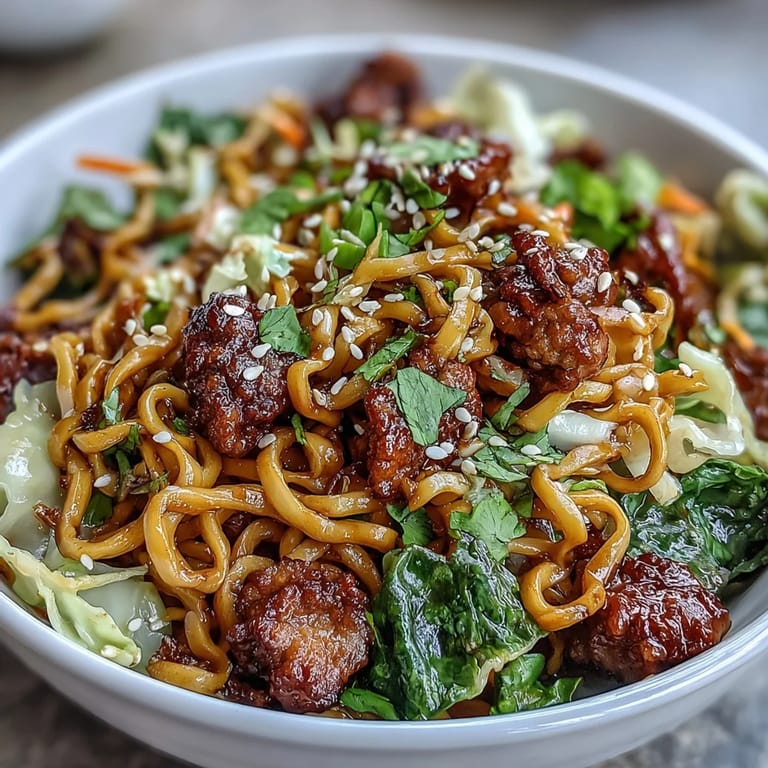
 One Tuesday night, I was standing in my kitchen thinking about potstickers—those crispy, pillowy dumplings I'd been craving all week—when it hit me: why not make a bowl instead? No folding, no steaming, just all those wonderful flavors layered over noodles. The result was this vibrant, comforting dish that tastes like potstickers but comes together in about 40 minutes. My partner took one bite and asked if I'd finally opened a restaurant, which felt like the highest compliment.
I made this for my neighbor Sarah who was going through a rough stretch, and watching her face light up when she smelled the garlic and ginger hitting the oil reminded me that food really does have healing power. She came back the next day asking for the recipe, and I love that she now makes it for her own family.
Ingredients
- Rice noodles or lo mein: Rice noodles stay delicate and won't get mushy, but lo mein gives a chewier bite—pick whichever matches your mood.
- Ground pork or chicken: Pork holds seasoning beautifully and gets those crispy, caramelized edges you crave, but chicken works if that's what you have.
- Soy sauce, sesame oil, and cornstarch (meat seasoning): This trio is borrowed straight from dumpling fillings and makes the meat taste authentically potsticker-like and slightly sticky.
- Garlic and ginger: These are non-negotiable; they're what make your kitchen smell like a proper Asian restaurant.
- Green cabbage and carrots: They stay bright and slightly crisp even after cooking, adding texture and that fresh vegetable note.
- Mushrooms: They add umami depth and absorb all those savory flavors beautifully.
- Potsticker-style sauce: The combination of soy, vinegar, oyster sauce, and chili-garlic creates that sweet-salty-spicy balance that makes you want to scrape the bowl clean.
- Sesame seeds and cilantro: These finish the dish with brightness and nuttiness, turning it from good to restaurant-quality.
Tired of Takeout? 🥡
Get 10 meals you can make faster than delivery arrives. Seriously.
One email. No spam. Unsubscribe anytime.
Instructions
- Prepare your noodles first:
- Boil a large pot of water and cook the rice noodles according to the package—you want them tender but not falling apart. Drain, rinse briefly with cold water, and toss with a few drops of oil so they don't clump together as they cool.
- Season the meat properly:
- Whisk the soy sauce, sesame oil, cornstarch, white pepper, sugar, and salt in a small bowl until the sugar dissolves. Pour this over your ground pork or chicken and fold it together gently—you're not making a meatball, just coating everything evenly so it gets that dumpling-like texture. If you're using napa cabbage, squeeze it dry first, then fold it in; this adds moisture and flavor without making the meat wet.
- Mix the sauce ahead:
- Combine all the sauce ingredients—soy sauce, rice vinegar, oyster sauce, chili-garlic sauce, sesame oil, brown sugar, and broth—and whisk until the sugar dissolves. Taste it now; this is your chance to adjust heat or sweetness before everything comes together.
- Prep all your vegetables:
- Shred your cabbage and carrots, slice the mushrooms, separate the green onion whites from the tops, and rinse your bean sprouts if using them. Having everything ready means you can cook confidently without scrambling halfway through.
- Brown the meat properly:
- Heat 1 tablespoon of oil in your largest nonstick skillet or wok over medium-high heat. Crumble the seasoned meat into an even layer and let it sit undisturbed for 2 to 3 minutes—this is the secret to those beautiful, crispy, caramelized bits that taste like the bottom of a potsticker. Then break it up, stir, and cook another 3 to 4 minutes until it's golden and cooked through. Spoon off any excess fat, leaving just a teaspoon or two for flavor.
- Wake up the pan with aromatics:
- Push your meat to one side of the pan, add the remaining oil to the empty space, and tumble in the garlic, ginger, and white parts of the green onions. Stir constantly for 30 to 60 seconds until your kitchen smells absolutely amazing, then mix everything back together.
- Cook the vegetables until they sing:
- Add your mushrooms first and let them soften for 2 to 3 minutes, then add the cabbage and carrots. Stir-fry for 3 to 4 minutes until the cabbage is wilted but still has some snap to it. If the pan looks dry, splash in a little water to keep everything moving.
- Bring it all together with sauce:
- Pour that gorgeous sauce over everything and toss until every strand of vegetable and piece of meat is coated. Simmer for 1 to 2 minutes to let the sauce thicken slightly and get even glossier.
- Add the noodles and finish:
- Toss in your cooked noodles gently but thoroughly, coating them in all that savory sauce. If it feels too dry, add 2 to 4 tablespoons of water or broth. Stir in the bean sprouts at the very end if you're using them, just so they stay crisp.
- Taste, season, and serve:
- Take a taste and adjust with extra soy sauce, chili-garlic sauce, or a squeeze of lime juice. Turn off the heat, stir in half of the green onion tops, then divide into bowls. Top with the remaining green onions, cilantro, and a generous sprinkle of toasted sesame seeds.
 Merken
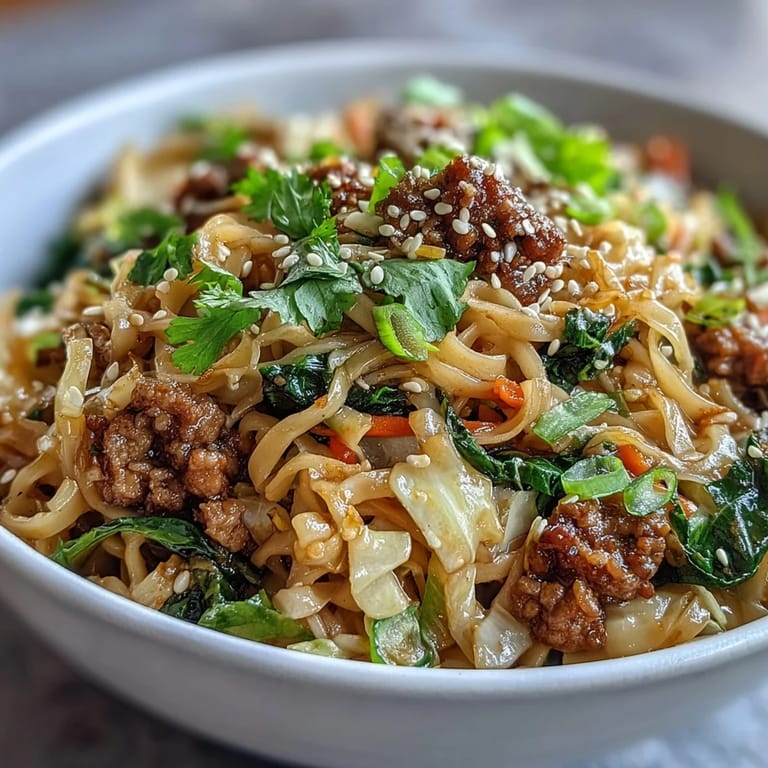
 There's something magical about the moment when you pour that sauce over the sizzling meat and vegetables and everything starts to glisten together. I watched my teenage daughter take her first bite and immediately ask for seconds, which is basically her love language.
The Secret to Crispy Meat
The difference between meat that tastes like potsticker filling and meat that's just... cooked... comes down to patience and heat. When you crumble the seasoned meat into the hot oil and leave it alone, you're building a flavorful crust through a process called the Maillard reaction. This is the same technique restaurant cooks use, and it transforms simple ground pork into something that feels luxurious and craveable. The cornstarch in the seasoning mixture helps create that slightly sticky, dumpling-like texture that holds everything together.
Why This Sauce Works
This sauce is balanced in a way that makes you keep eating long after you're full. The soy sauce and oyster sauce bring umami and depth, the rice vinegar adds brightness and cuts through the richness, the chili-garlic sauce provides heat, and the brown sugar rounds everything out with subtle sweetness. The chicken broth dilutes it just enough so it coats the noodles instead of pooling at the bottom of the bowl. I've learned that if your sauce tastes too strong before it hits the noodles, it's perfect—the pasta will absorb and mellow it out.
Making It Your Own
This recipe is flexible enough to work with whatever you have in your fridge or pantry. Some nights I add a soft-boiled egg for richness, other times I use turkey instead of pork, and last month I made it completely vegetarian by replacing the ground meat with crumbled extra-firm tofu seasoned the same way. The vegetables can change with the season or your mood—baby bok choy, snap peas, water chestnuts, or even shredded kale all work beautifully in place of or alongside the cabbage.
- For gluten-free, swap regular soy sauce and oyster sauce for their gluten-free versions and use rice noodles instead of wheat.
- Leftovers keep for up to 3 days in the refrigerator; reheat gently with a splash of water so the noodles don't dry out.
- If you're making this for a crowd, you can cook the meat and vegetables up to an hour ahead and store them separately, then combine everything just before serving.
 Merken
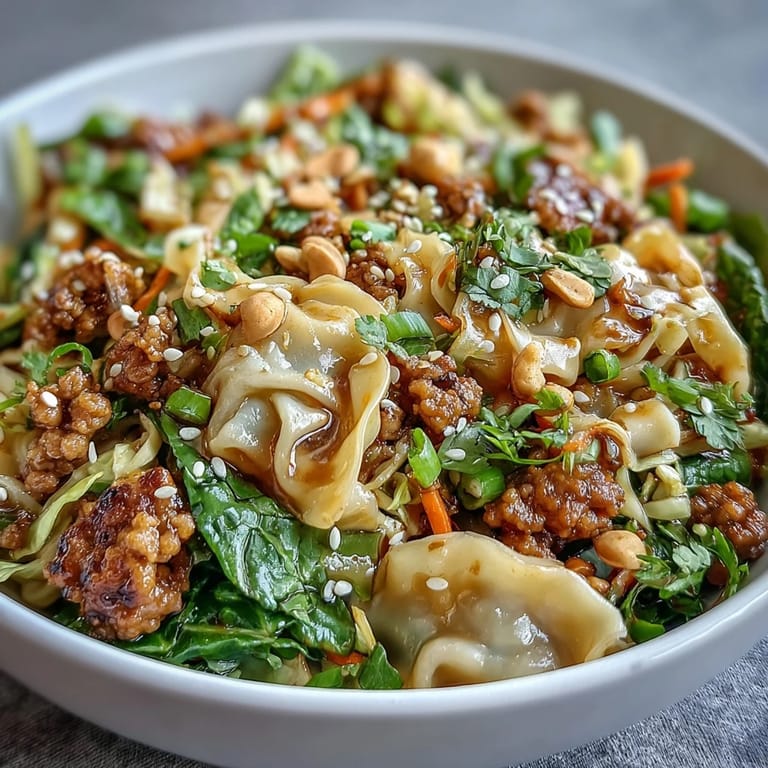
 This bowl has become my go-to dinner when I want something that tastes impressive but doesn't demand hours in the kitchen. It's the kind of dish that makes your whole family feel taken care of.
Fragen & Antworten zum Rezept
- → Kann ich Reisnudeln durch andere Nudelsorten ersetzen?
Ja, Sie können Lo-Mein-Nudeln, Udon oder甚至 Vollkornnudeln verwenden. Achten Sie darauf, die Garzeit entsprechend den Packungsanweisungen anzupassen. Für glutenfreie Varianten eignen sich Reisnudeln oder Glasnudeln am besten.
- → Welches Fleisch passt alternativ zu Schweinefleisch?
Hühnchen, Putenfleisch, Rinderhack oder pflanzliche Fleischalternativen funktionieren hervorragend. Die Würzmischung passt zu allen mageren Hackfleischsorten und sorgt für den klassischen Potsticker-Geschmack.
- → Wie kann ich das Gericht glutenfrei zubereiten?
Verwenden Sie Tamari anstelle von Sojasauce, überprüfen Sie die Austernsauce auf Glutenfreiheit und wählen Sie Reisnudeln. Viele Austernsaucen enthalten Weizen, daher empfiehlt sich eine glutenfreie Variante oder eine Alternative wie Hoisin-Sauce.
- → Lässt sich die Sauce im Voraus zubereiten?
Absolut – die Sauce lässt sich bis zu einer Woche im Kühlschrank aufbewahren. Alle Zutaten verrühren und in einem verschlossenen Behälter lagern. Vor dem Gebrauch gut umrühren, da sich Zucker und Gewürze absetzen können.
- → Wie kann ich die Schärfe anpassen?
Reduzieren Sie die Chilisauce oder lassen Sie sie ganz weg. Für mehr Schärfe fügen Sie zusätzlich Chiliflocken, frischen Chili oder Sambal Oelek nach Geschmack hinzu. Servieren Sie zusätzlich Chilisauce separat, damit jeder portionsweise nachwürzen kann.
- → Geeignet für Meal Prep?
Ja, das Gericht hält sich 3 Tage im Kühlschrank und lässt sich hervorragend portionsweise vorbereiten. Beim Erwärmen einen Spritzer Wasser hinzufügen, damit die Nudeln nicht austrocknen. Frische Kräuter und Sesam erst vor dem Servieren hinzufügen.